top of page
Home
About Me
About Ms. Julie
Children/Teens
Play Therapy
Guardians
Guardian Support and Information
Professionals
Professional and Supervision Services
Group Trainings Home
Resources
Videos
Websites
Books
Podcasts
Social Media
Events
Contact
Contact Forms
More...
Use tab to navigate through the menu items.
VIDEOS
Join us as we explore practical strategies and insights from licensed play therapists to nurture your child's emotional well-being.
Parenting Tips
featuring Ms. Julie
:
Playlists curated by Ms. Julie
:
PLAY THERAPY
Play Video
Play Video
07:44
Play Therapy Works!
This video introduces and promotes the value of play, play therapy, credentialed play therapists, and membership in the Association for Play Therapy.
Play Video
Play Video
01:25
Introducing Andrew
Play Video
Play Video
01:29
Meet Andrés!
Play Video
Play Video
14:04
The Single Most Important Parenting Strategy | Becky Kennedy | TED
Everyone loses their temper from time to time — but the stakes are dizzyingly high when the focus of your fury is your own child. Clinical psychologist and renowned parenting whisperer Becky Kennedy is here to help. Not only does she have practical advice to help parents manage the guilt and shame of their not-so-great moments but she also models the types of conversations you can have to be a better parent. (Hint: this works in all other relationships too.) Bottom line? It's never too late to reconnect. If you love watching TED Talks like this one, become a TED Member to support our mission of spreading ideas: https://ted.com/membership Follow TED! Twitter: https://twitter.com/TEDTalks Instagram: https://www.instagram.com/ted Facebook: https://facebook.com/TED LinkedIn: https://www.linkedin.com/company/ted-conferences TikTok: https://www.tiktok.com/@tedtoks The TED Talks channel features talks, performances and original series from the world's leading thinkers and doers. Subscribe to our channel for videos on Technology, Entertainment and Design — plus science, business, global issues, the arts and more. Visit https://TED.com to get our entire library of TED Talks, transcripts, translations, personalized talk recommendations and more. Watch more: https://go.ted.com/beckykennedy https://youtu.be/PHpPtdk9rco TED's videos may be used for non-commercial purposes under a Creative Commons License, Attribution–Non Commercial–No Derivatives (or the CC BY – NC – ND 4.0 International) and in accordance with our TED Talks Usage Policy: https://www.ted.com/about/our-organization/our-policies-terms/ted-talks-usage-policy. For more information on using TED for commercial purposes (e.g. employee learning, in a film or online course), please submit a Media Request at https://media-requests.ted.com #TED #TEDTalks #parenting
Play Video
Play Video
11:17
The Repair of Early Trauma: A Bottom Up Approach
Told to us through the voices of children, this unique animation teaches us that by putting together the seven-piece jigsaw puzzle of 'Developmental Trauma', we can understand how a child’s adverse childhood experiences have shaped their emotional world and outward behaviour. Once we understand this, we can then work with a child to help them with their developmental trauma using an innovative therapeutic approach called the ‘Neuro-Sequential Model of Therapeutics’. This model recovers and repairs each part of a child’s brain in a specific, phased and effective order. Find the full article here with links to free training resources: http://beaconhouse.org.uk/developmental-trauma/the-repair-of-early-trauma-a-bottom-up-approach/ With thanks to http://www.innerworldwork.co.uk
Play Video
Play Video
12:25
The Window of Tolerance
This animation uses beautiful imagery to describe what we mean by our ‘Window of Tolerance’. Our Window of Tolerance is where we are at our personal best – where we can play, think, love and be loved. When we experience trauma and adversity – our Window of Tolerance narrows, and we become sensitive to stress. Here, we explore what this looks like in children and adults, and we also explore how you can support those of us who carry trauma in our nervous system. You will find lots more freely available resources, animations and information on our website; along with training courses aimed at supporting people who are carrying trauma and stress. Visit www.beaconhouse.org.uk Music by www.bensound.com
Play Video
Play Video
06:26
The Window Of Tolerance (edited version of our original 2018 video)
We are pleased to share our animation on the Window of Tolerance. Find out how a traumatised child swings from fight/flight to freeze/collapse; and what adults can do to help bring the child back into their window of tolerance so they can be at their personal best. Thank you to Ben at Bensound.com for allowing his track to be used in this way. Full credits can also be found at the end of the animation.
Play Video
Play Video
13:38
The Repair of Intergenerational Trauma
Welcome to James’ story – a story about how a childhood of trauma and adversity led James to feel despair, loneliness and rage. Walk with James through his pain to a new chapter in his life where he begins to heal, and create a new and hopeful future. James’ story and the images you’ll see may trigger powerful feelings - look after yourself as you walk by his side. If you are affected by this animation and would like to talk to someone, here are some useful numbers: Samaritans – 116 123 Mind Helpline - 0300 123 3393 Young Minds - 0808 802 5544 Childline – 0800 1111 Sound is by BenSound.com | Content created by Beacon House Therapeutic Services & Trauma Team | Copyright 2019 | All Rights Reserved
RESOURCES FOR PARENTS
Play Video
Play Video
07:54
5 Incredibly Fun GAMES to Teach Self-Regulation (Self-Control) | Social Emotional Learning
Social-emotional learning (SEL) is the process of developing the self-awareness, self-regulation, and interpersonal skills that are vital for school, work, and life success. People with strong social-emotional skills are better able to cope with everyday challenges and benefit academically, professionally, and socially. Teaching kids to have self-regulation is one of the most important character traits we can teach. Experts believe that kids who master self-regulation become masters of their learning, are more critical thinkers, and make healthier choices; and the benefits are life-long. As parents, I am sure we have observed that little kids have very minimal self-regulation and older kids have some! We adults have developed this self-regulation over time. While it is something that develops as we mature, should we leave the ability to self-regulate up to nature alone, or is there something we could do at home to help kids develop or strengthen this important skill? Some exciting research says self-regulation is something kids can learn. And the best part? It can be taught through play. Note: I've interchangeable used the terms self-regulation and self-control only for the sake of understanding. As Dr. Stuart Shanker says, "There is a profound difference between self-regulation and self-control. Self-control is about inhibiting strong impulses; self-regulation, reducing the frequency and intensity of strong impulses by managing stress-load and recovery. In fact, self-regulation is what makes self-control possible, or, in many cases, unnecessary. The reason lies deep inside the brain." * 𝗨𝗣𝗗𝗔𝗧𝗘 (𝗢𝗰𝘁 𝟮𝟬𝟮𝟬) * - I've made a follow-up video with 5 more research proven games to help develop self-regulation in kids (https://youtu.be/TkPwr_plwhU) ~~~~~~~~~~~~~~~~~~~~~~~~~~~~~~~~~~~~~~~~~~~~~~~~~~~~~~~~~~~ OTHER AWESOME GAMES TO IMPROVE SELF-REGULATION (SELF-CONTROL) 1. My Feelings Game. Fun Educational Family Game to Help Kids Express Their Emotions and Learn self Regulation. Endorsed by Dr Temple Grandin and Other World Renown clinicians and Educators: https://amzn.to/2NnmRXn 2. Social Emotional Games NoWaries S.T.O.R.M. | Best Educational Learning Resources for Kids & Adults | Emotional Awareness, Control, & Vocabulary: https://amzn.to/2QgbPpe 3. Mad Dragon: An Anger Control Card Game | Designed for children aged 6 to 12 | Fun & therapeutic card game teaching anger control: https://amzn.to/2LDx6ER 4. Go Fish: Swimming Toward Self Control | This game addresses the importance self-control and impulse control during school, home, and after-school activities | Designed for children aged 4 to 12: https://amzn.to/32Po2Cz ~~~~~~~~~~~~~~~~~~~~~~~~~~~~~~~~~~~~~~~~~~~~~~~~~~~~~~~~~~~
Play Video
Play Video
06:47
Why Do We Lose Control of Our Emotions?
Simple, easy-to-understand whiteboard animation to help early Elementary-aged children gain an understanding of the way their brains work to recognize and manage their emotions. This is intended as a beginning resource to help children, parents, educators, and those who work with children to encourage mindfulness, empathy, and emotional regulation. The Hand/Brain Model included in the video is a concept by Dr. Dan Siegel. More information on "Flipping your Lid" and the Hand/Brain model can be found at www.drdansiegel.com. You can check out a great video here: https://youtu.be/vESKrzvgA40. Other excellent resources include: Zones of Regulation: www.zonesofregulation.com Mind UP: www.mindup.org California Department of Education - Social Emotional Development: http://www.cde.ca.gov/sp/cd/re/itf09socemodev.asp Developing Self Regulating Learners: http://www.pearsoncanada.ca/media/highered-showcase/multi-product-showcase/butler-preface.pdf Mindful Schools: www.mindfulschools.org Building Resilience in Children: http://www.heysigmund.com/building-resilience-children/ Calm, Alert and Learning: https://self-reg.ca/self-reg/books/calm-alert-learning/
Play Video
Play Video
02:13
Fight Flight Freeze – A Guide to Anxiety for Kids
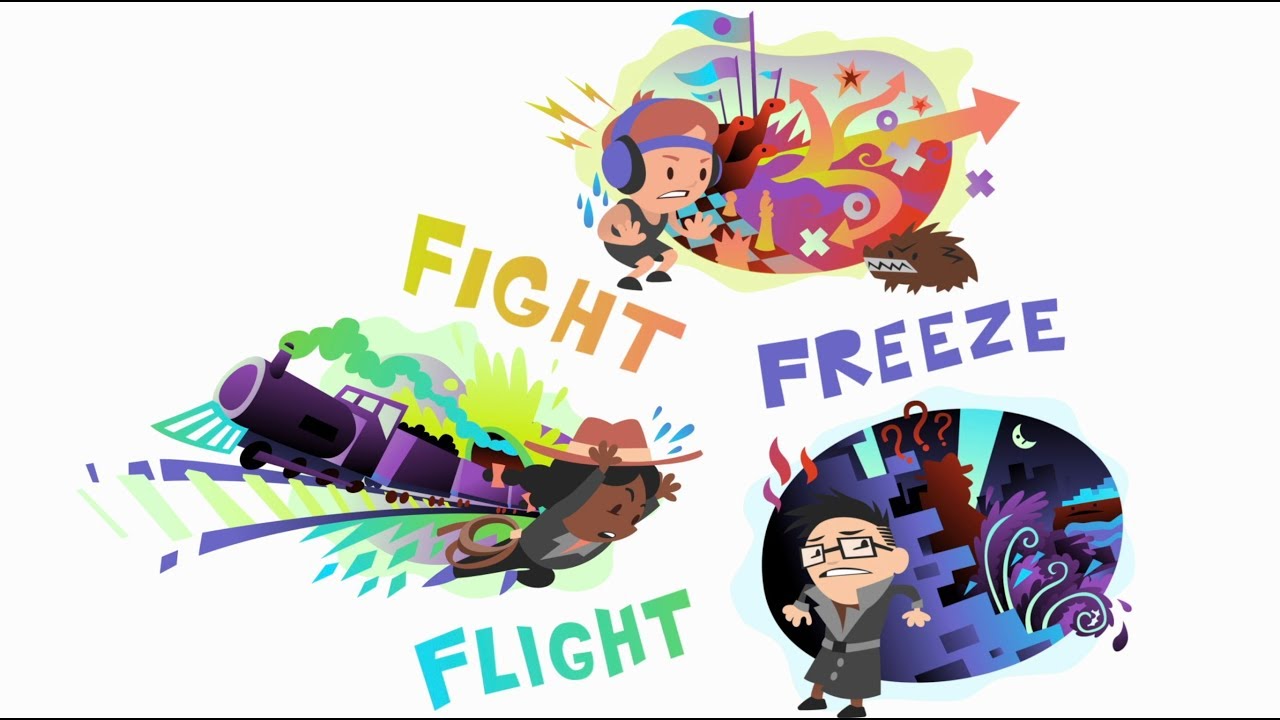
(www.anxietycanada.com) This video teaches kids how anxiety is a normal biological response – called “Fight, Flight, Freeze” – that can get triggered inappropriately in the modern world. Anxiety Canada created this video with support from BC Partners for Mental Health and Addictions Information. Anxiety triggers something called the “fight-flight-freeze” response (F3). This automatic response affects our thoughts, body, and behaviors. When faced with a potential threat, your thoughts focus on the danger, your body revs up to help protect you, and you take action (fight, flight, or freeze). For example, imagine that you’re out walking your dog and a skunk pops out of the bushes. You have thoughts about the skunk such as “What if it sprays us?” which helps you identify the potential danger. Your body also reacts (heart beats faster, muscle tense up) to help you get prepared to protect yourself. And, you take action, such as remaining very still and hoping the skunk doesn’t notice you (freeze) or running away (flight). As you can see, anxiety protects you. In fact, without it, we’d be extinct! The F3 system is critical to our survival from true threat or danger, but what happens when there is no real danger? Interestingly, anxiety can also trigger this system into action when we believe there is a threat or danger even if there isn’t. For example, you may yell at your mum for bugging you about taking your driving test when you don’t feel ready (fight). Or you may call your dad to pick you up early from a new activity because you don’t feel comfortable around unfamiliar people (flight). Or, you may feel as though your mind goes blank when the teacher asks you a question (freeze). These are examples of anxiety triggering the F3 alarm even though these situations are not really dangerous. We call this a “false alarm.” The BC Partners are a group of seven leading provincial mental health and addictions non-profit agencies: Anxiety Canada, BC Schizophrenia Society, Centre for Addictions Research of BC, Canadian Mental Health Association's BC Division, FORCE Society for Kids' Mental Health, Family Services of the North Shore's Jessie's Legacy Program and Mood Disorders Association of BC. For further information, please visit the following sites: www.AnxietyCanada.com http://www.HereToHelp.bc.ca
Play Video
Play Video
04:01
Fight Flight for Kids
This video describes the fight or flight response in the spirit of Acceptance Commitment Therapy. It explores the evolutionary perspective and encourages normalisation of anxiety. About Jodie Wassner Jodie Wassner is an Educational and Developmental Psychologist with over 25 years experience counselling young people and their families in Melbourne and Sydney. She divides her professional time equally between clinic work with young people and educational training for psychologists and other health professionals, via local and international workshops, as well as supervision for psychologists and provisional psychologists worldwide. Jodie completed her Masters of Psychology (Educational and Developmental) degree at Monash University. She went on to spend the next fifteen years working as a school psychologist in Primary and Secondary schools, followed by 10 years in private practice focusing on young people and their families. She is especially familiar with the issues that are likely to emerge across the developmental period and has extensive experience working with anxiety, depression, autism spectrum conditions, attention deficits, learning difficulties, grief, anger, family conflict, bullying, sleep disturbance, stress management, social skills, school refusal, eating disturbance and OCD. Her two professional passions are neurodiversity (particularly autism and attention deficits) and Acceptance and Commitment Therapy (ACT). Clinic Work Jodie runs a busy private practice in Sydney and will be relocating to Melbourne late 2021. She works predominantly with autism, anxiety, OCD and ADHD. Jodie has always had a knack for connecting with young people. She harbours a genuine love for kids and teens and treats them with compassion and understanding from the outset. Young people and their families often comment that they feel safe and understood in Jodie's care. She has a particular reputation for helping dozens of families in her clinic to navigate the challenges of autism as well as embrace the strengths and passions that accompany neurodiversity. Workshops Jodie is a seasoned presenter and has delivered countless workshops to health professionals, schools and the community. She is a workshop facilitator for several highly respected organisations including the Black Dog Institute and Learning Links. She has also presented her own work at several conferences including The Australian Psychological Society, Body Image and Better Health Inc. in conjunction with VicHealth, Association for Contextual Behavioural Sciences and Shire Australia Clinical Insights: Modern Management of ADHD- Building the Therapeutic Alliance. Jodie has co-written a ten-session manual for psychologists working with anxious children using the principles of Acceptance and Commitment Therapy. Jodie is President of the International Autism and ACT ACBS group and is a Fellow of the APS College of Educational and Developmental Psychologists.
Play Video
Play Video
14:04
The Single Most Important Parenting Strategy | Becky Kennedy | TED
Everyone loses their temper from time to time — but the stakes are dizzyingly high when the focus of your fury is your own child. Clinical psychologist and renowned parenting whisperer Becky Kennedy is here to help. Not only does she have practical advice to help parents manage the guilt and shame of their not-so-great moments but she also models the types of conversations you can have to be a better parent. (Hint: this works in all other relationships too.) Bottom line? It's never too late to reconnect. If you love watching TED Talks like this one, become a TED Member to support our mission of spreading ideas: https://ted.com/membership Follow TED! Twitter: https://twitter.com/TEDTalks Instagram: https://www.instagram.com/ted Facebook: https://facebook.com/TED LinkedIn: https://www.linkedin.com/company/ted-conferences TikTok: https://www.tiktok.com/@tedtoks The TED Talks channel features talks, performances and original series from the world's leading thinkers and doers. Subscribe to our channel for videos on Technology, Entertainment and Design — plus science, business, global issues, the arts and more. Visit https://TED.com to get our entire library of TED Talks, transcripts, translations, personalized talk recommendations and more. Watch more: https://go.ted.com/beckykennedy https://youtu.be/PHpPtdk9rco TED's videos may be used for non-commercial purposes under a Creative Commons License, Attribution–Non Commercial–No Derivatives (or the CC BY – NC – ND 4.0 International) and in accordance with our TED Talks Usage Policy: https://www.ted.com/about/our-organization/our-policies-terms/ted-talks-usage-policy. For more information on using TED for commercial purposes (e.g. employee learning, in a film or online course), please submit a Media Request at https://media-requests.ted.com #TED #TEDTalks #parenting
Play Video
Play Video
11:17
The Repair of Early Trauma: A Bottom Up Approach
Told to us through the voices of children, this unique animation teaches us that by putting together the seven-piece jigsaw puzzle of 'Developmental Trauma', we can understand how a child’s adverse childhood experiences have shaped their emotional world and outward behaviour. Once we understand this, we can then work with a child to help them with their developmental trauma using an innovative therapeutic approach called the ‘Neuro-Sequential Model of Therapeutics’. This model recovers and repairs each part of a child’s brain in a specific, phased and effective order. Find the full article here with links to free training resources: http://beaconhouse.org.uk/developmental-trauma/the-repair-of-early-trauma-a-bottom-up-approach/ With thanks to http://www.innerworldwork.co.uk
Play Video
Play Video
12:25
The Window of Tolerance
This animation uses beautiful imagery to describe what we mean by our ‘Window of Tolerance’. Our Window of Tolerance is where we are at our personal best – where we can play, think, love and be loved. When we experience trauma and adversity – our Window of Tolerance narrows, and we become sensitive to stress. Here, we explore what this looks like in children and adults, and we also explore how you can support those of us who carry trauma in our nervous system. You will find lots more freely available resources, animations and information on our website; along with training courses aimed at supporting people who are carrying trauma and stress. Visit www.beaconhouse.org.uk Music by www.bensound.com
Play Video
Play Video
06:26
The Window Of Tolerance (edited version of our original 2018 video)
We are pleased to share our animation on the Window of Tolerance. Find out how a traumatised child swings from fight/flight to freeze/collapse; and what adults can do to help bring the child back into their window of tolerance so they can be at their personal best. Thank you to Ben at Bensound.com for allowing his track to be used in this way. Full credits can also be found at the end of the animation.
Dan Siegel - Whole Brain
Play Video
Play Video
18:27
Mindfulness and Neural Integration: Daniel Siegel, MD at TEDxStudioCityED
Exploring Relationships and Reflection in the Cultivation of Well-Being. Daniel Siegel, MD, is Clinical Professor of psychiatry at UCLA, Co-Director of Mindful Awareness Research Center, Executive Director of Mindsight Institute, author, and recipient of numerous awards and honorary fellowships. This talk examines how relationships and reflection support the development of resilience in children and serve as the basic '3 R's" of a new internal education of the mind. In the spirit of ideas worth spreading, TEDx is a program of local, self-organized events that bring people together to share a TED-like experience. At a TEDx event, TEDTalks video and live speakers combine to spark deep discussion and connection in a small group. These local, self-organized events are branded TEDx, where x = independently organized TED event. The TED Conference provides general guidance for the TEDx program, but individual TEDx events are self-organized.* (*Subject to certain rules and regulations)
Play Video
Play Video
08:16
Dan Siegel - The Opportunity to Build the Circuits of Kindness and Resilience
Play Video
Play Video
13:41
Dan Siegel - How to Successfully Build an "Integrated" Child
Play Video
Play Video
05:18
Dan Siegel - Connecting to Calm
Play Video
Play Video
08:31
Dan Siegel - "Being" Versus "Doing" With Your Child
Play Video
Play Video
07:28
Dan Siegel - "Flipping Your Lid:" A Scientific Explanation
Play Video
Play Video
14:04
Dan Siegel - Use Mind Sight to Nurture a Shy Child
Play Video
Play Video
01:05
How to Stop Tantrums Daniel Siegel
Watch more expert toddler parenting videos - http://goo.gl/EIWAhs Can giving toddlers a short lesson in neurology help curb tantrums? Dr. Dan Siegel's advice for helping kids understand how their brains work. For more expert advice on parenting toddlers, visit http://www.kidsinthehouse.com/toddler Daniel Siegel, MD, is a psychiatrist, a professor at the UCLA School of Medicine, a Distinguished Fellow of the American Psychiatric Association and the co-author of Parenting From the Inside Out, and The Whole Brain Child. -~-~~-~~~-~~-~- Please watch: "Celebrities Give Parenting Advice" https://www.youtube.com/watch?v=3j_pGQ5ac-0 -~-~~-~~~-~~-~-
CPRT
Play Video
Play Video
03:27
Life's First Feelings clip 1 for CPRT training
Play Video
Play Video
10:03
Special Play Time Demonstration by Mary Bennett, PhD, LPC-S, RPT-S
Special Play Time Demonstration by Mary Bennett, PhD, LPC-S, RPT-S
Play Video
Play Video
04:22
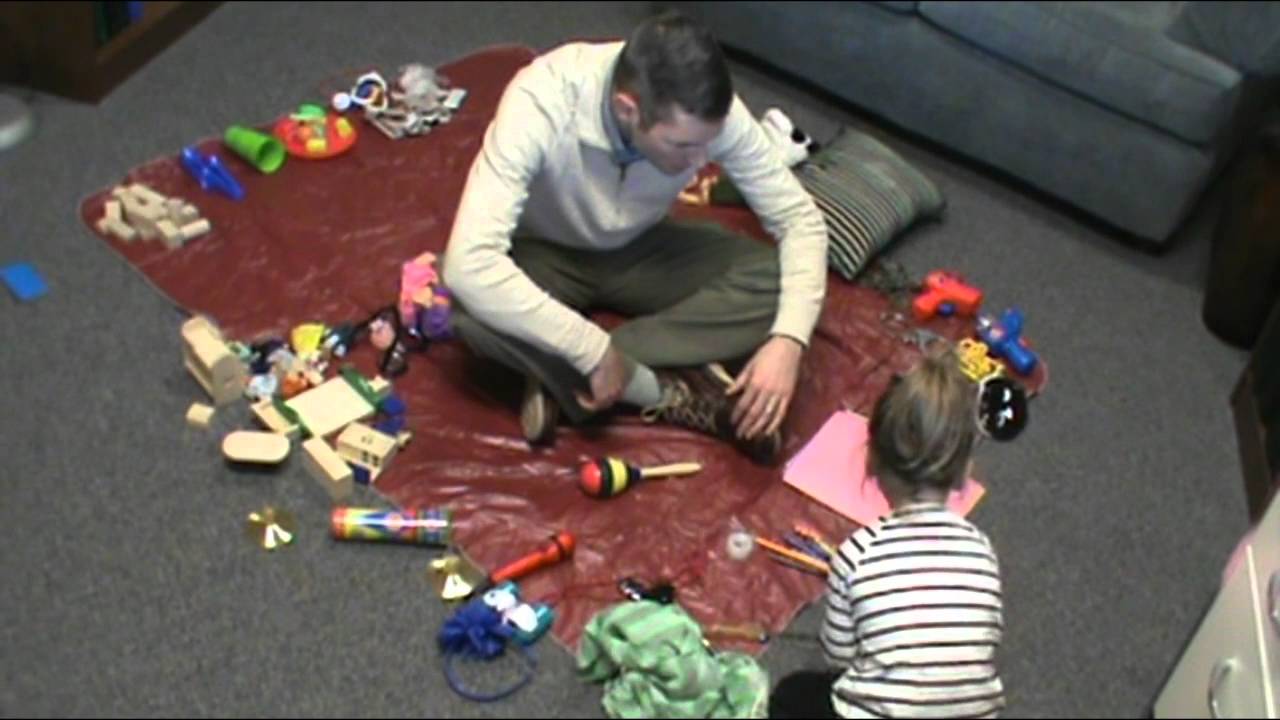
Filial Play Therapy: "Special Playtime" in Child Parent Relationship Therapy (CPRT)
This is a description and demonstration of "special playtime" according to Child-Parent Relationship Therapy (CPRT). CPRT is a 10-session model of filial therapy where parents are trained in basic play therapy attitudes and skills and apply them in 30-minute play sessions once a week with their child of focus (typically 2-10 years old). www.PlayTherapyGuy.com
Play Video
Play Video
35:22
Choices, Cookies & Kids: A Creative Approach to Discipline by Dr. Garry Landreth
Children of all ages need the security of boundaries and limitations on behavior. I believe the most loving thing parents and care-taking adults can do is help children learn how to control their own behavior, to exercise self discipline, to say “no” to themselves. The Choices, Cookies & Kids Method is based on the principle that making choices is the basis for self-discipline and that creative choice giving teaches decision making which in turn develops self-responsibility and promotes self-control. Learn more at www.parentingpurposefully.com
Play Video
Play Video
06:39
Child-Centered Play Therapy DVD Preview
Bring Garry Landreth into your classroom and let him demonstrate CCPT in action! This DVD is a perfect complement to Play Therapy: The Art of the Relationship, giving students, instructors, supervisors, and practitioners visual reinforcement of the material presented in the text. www.routledgementalhealth.com/9780415886819 It shows a complete and unrehearsed play therapy session, featuring Garry Landreth as he works with a young girl in a fully eqipped play therapy room. The video illustrates the Child Centered Play Therapy approach by demonstrating The process of building a relationship with the child Following the child's lead Facilitating the development of the child's strengths Responding to accidents in the playroom Building a child's self-esteem Returning responsibility to the child Participating in a child's play without structuring Empowering the child Dealing with a child reluctant to leave the playroom Landreth provides audio commentary throughout to highlight key moments in the session and emphasize the basic principles of the child centered approach. Viewers will find watching this master therapist and pioneer of play therapy to be a unique and valuable teaching and learning opportunity.
YouTube Videos and Playlists for Parents:
bottom of page